The best research on engineering in the AI era says explicitly: do not cut your team.
We are about to argue the opposite and show you the math.
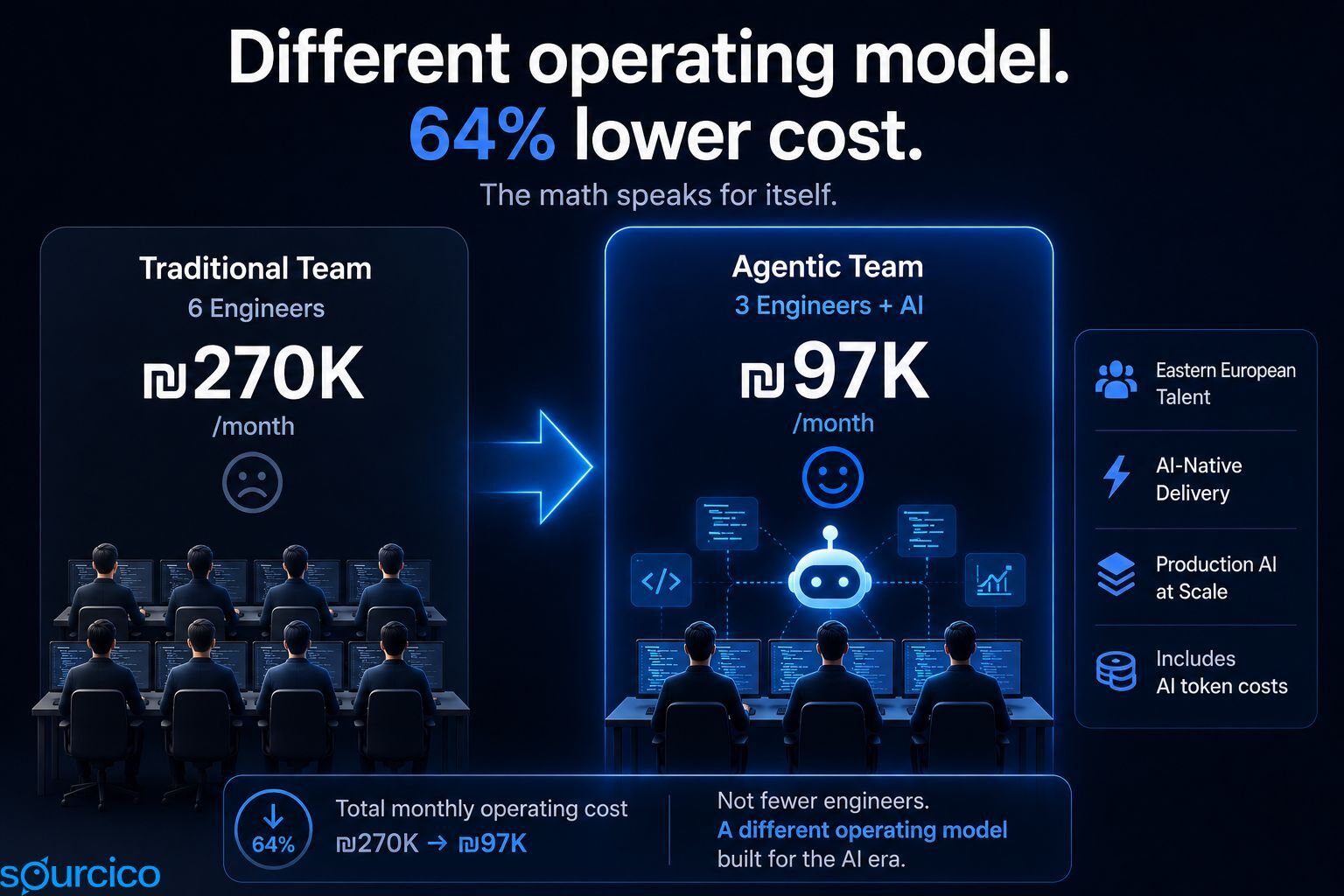
₪270,000 a month for six engineers.
₪97,000 for three.
The uncomfortable part is not the saving.
First, why the gap opened.
The currency: the dollar is down roughly 8% against the shekel this year, trading at around 3 shekels. Every dollar-denominated contract got cheaper while you did nothing.
The wage gap: a senior developer in Israel costs ₪40-52K fully loaded. A senior developer in Eastern Europe at $40-60/hour costs ₪20-29K all-in, including recruitment, HR, and overhead.
Agentic velocity, which nobody is pricing: Faros telemetry across 22,000 developers and 4,000 teams shows epics completed per developer up 66% and task throughput up 34%.
The math:
Israeli team, 6 engineers: ~₪270K/month
Eastern European agentic team, 3 engineers: ~₪85K/month
Tokens at production agent volume: ~₪12K/month
Total ₪97K. 64% less.
Tokens are the line nobody puts on the slide. Ours is metered and flexes with usage instead of sitting fixed on payroll.
Now the part that should stop you.
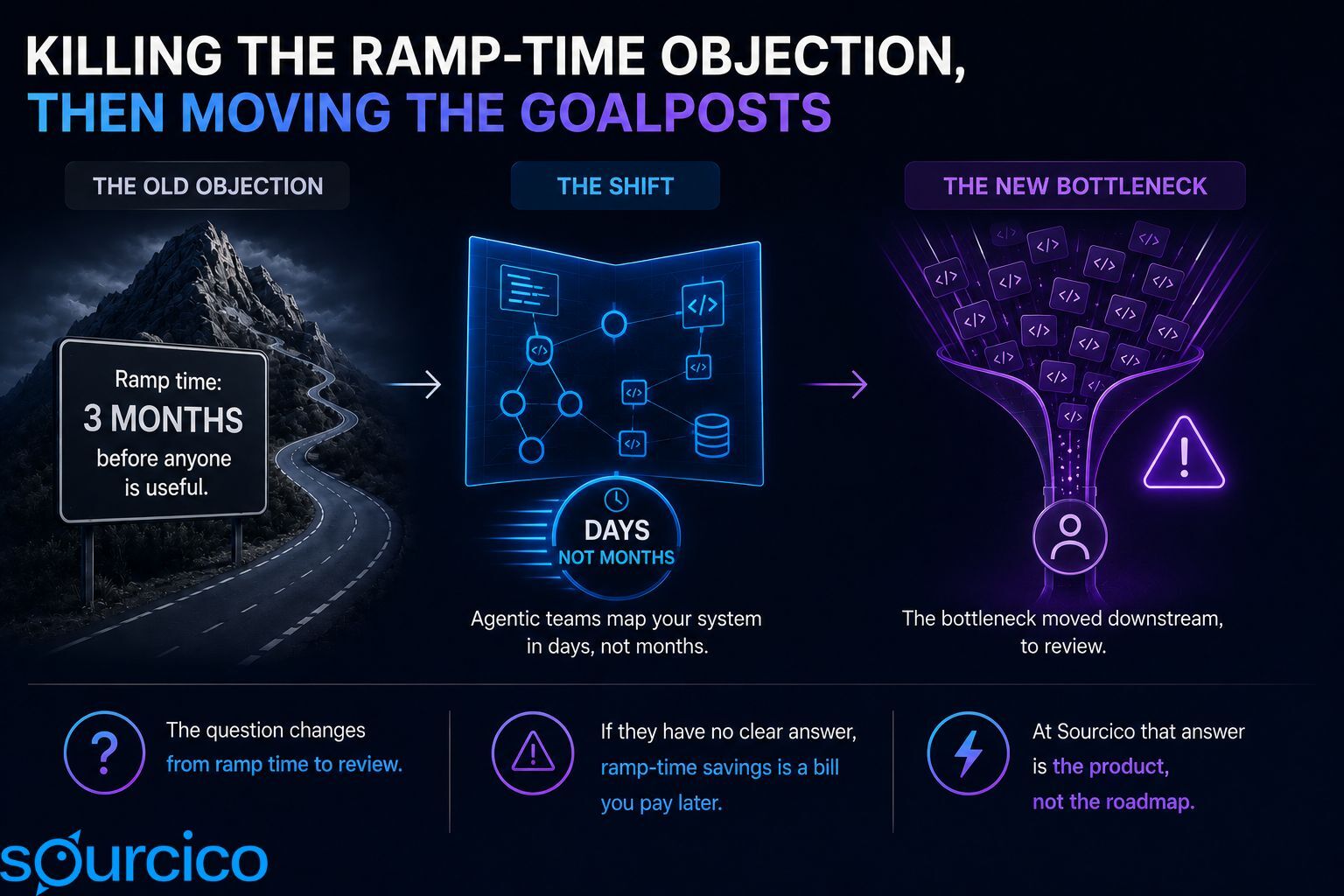
The same report found bugs per developer up 54%, incidents per pull request more than tripled, median review time up 5x, and 31% more PRs merging with no review at all. Faros calls it the Acceleration Whiplash. Their own recommendation is not to cut engineers, because the ones being considered for cuts are often the ones absorbing the quality gap AI creates.
They are right. Cut without changing how the work gets done, and you have simply bought the whiplash at a discount.
But the whiplash is not caused by too few engineers. It is caused by agent output at volume hitting a review process built for human pace. Three engineers who own that problem from day one absorb it. Six who inherited it as an afterthought do not.
That capability is cultural, not technical. A team that has worked one way for seven years does not become agentic because of an email from management.
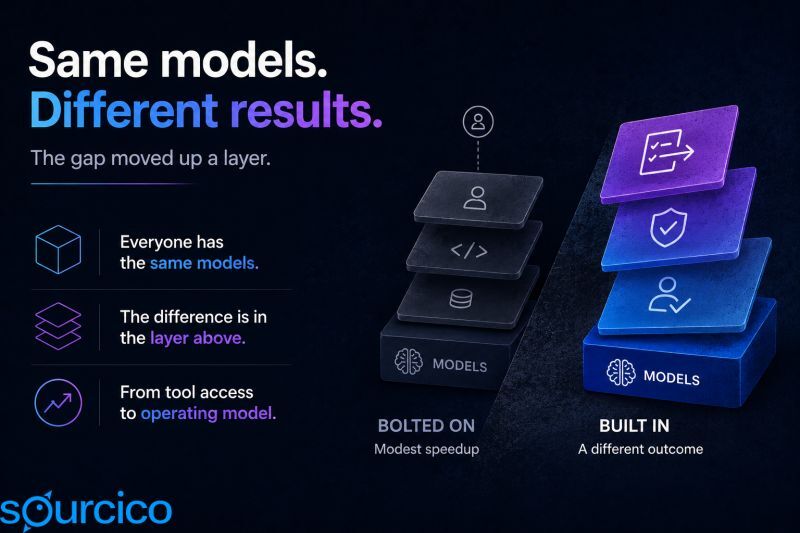
This is not outsourcing. It is a different operating model that happens to cost 64% less.
Sourcico is a member of the Claude Partner Network. We build Eastern European teams that run multiple agents in parallel. Developers who direct AI, not developers who use it. This is how our teams work daily, not a pilot on the side.
Send us your current team cost and your delivery numbers. We will run this arithmetic on your organisation, including the cases where it does not work, because there are some.










 This website uses cookies to ensure you get the best experience on our website