Sourcico Macedonia 11th Anniversary

Today, we’re celebrating 11 years of growth, partnerships, challenges conquered, and countless lines of code written by an incredible team.
To everyone who’s been part of this journey – thank you for helping shape who we are today.
Here’s to the milestones behind us and the exciting journey still ahead. 🥂

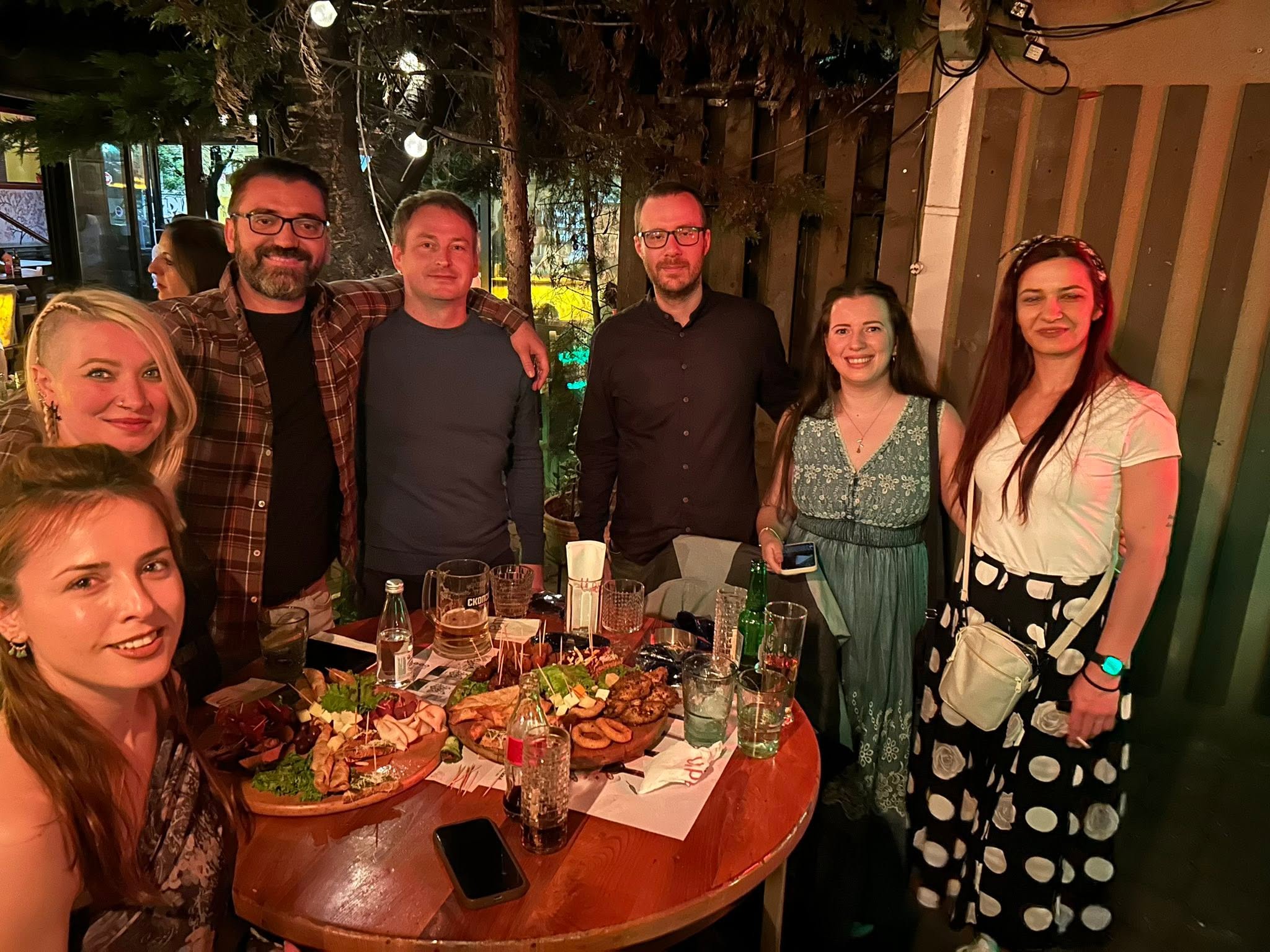
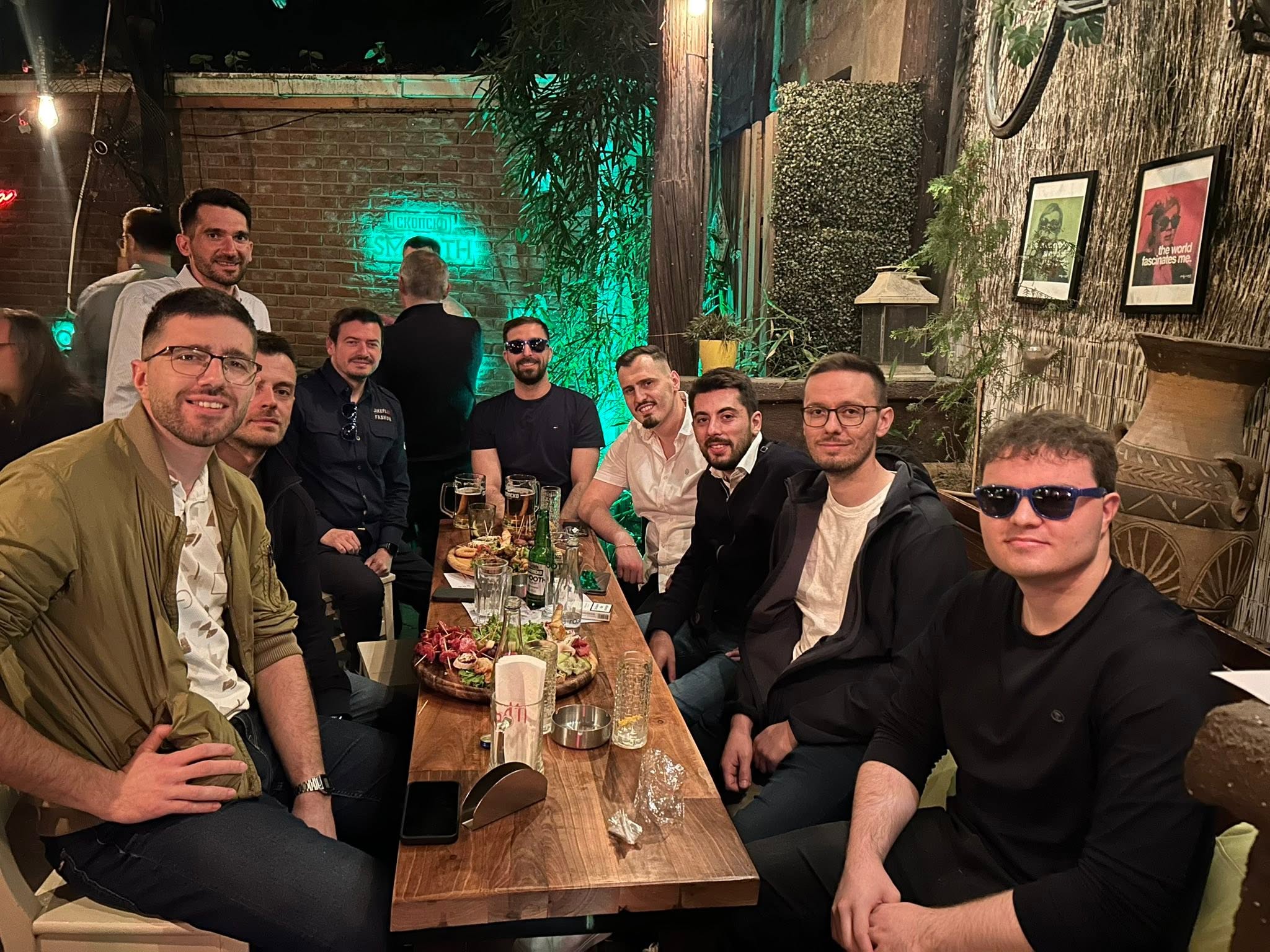
A small glimpse into our 11th anniversary celebration. Thank you for being part of our journey!

The Invisible Gap Between Your Roadmap and Your Capacity

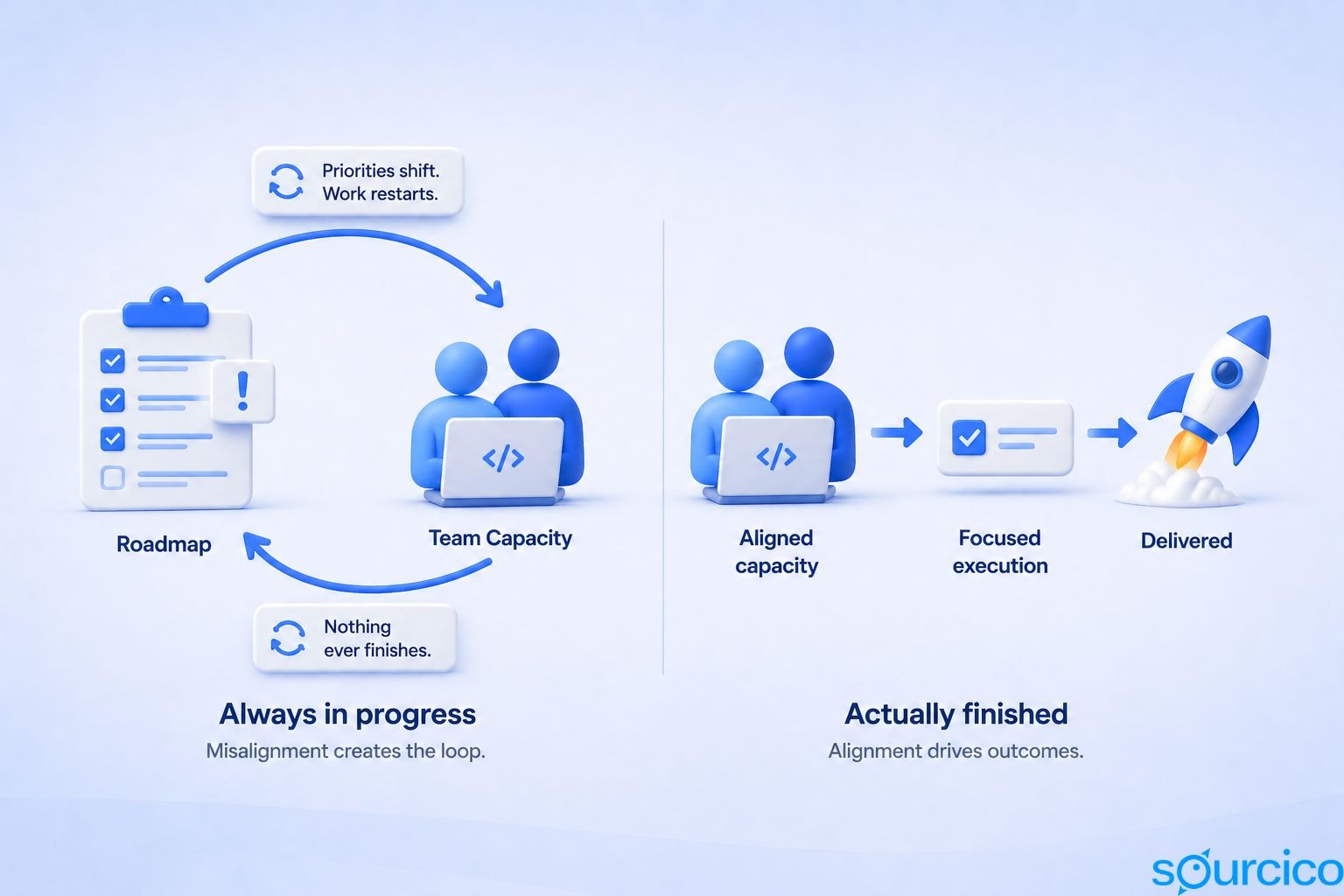
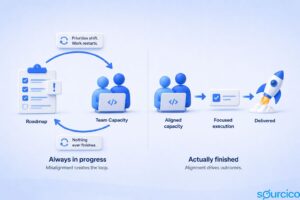
Eight months. Same team, same roadmap, same outcome – commitments made on Monday, quietly revised by Friday.

It’s not a performance problem. It’s a structural one: the roadmap was built around what the business needed. The team was built around what was possible to hire. Nobody ever put those two things in the same room.
That gap doesn’t feel like a crisis. It just feels like Tuesday.

Here’s what it looks like: priorities stack instead of replacing. The team is always mid-sprint on three things instead of being finished with one. Leadership asks why delivery is slow. The team asks why the roadmap never shrinks. Neither side is wrong – capacity was just never part of the conversation.

The teams that fix this don’t push harder. They get honest about what the current team can actually deliver, then close the gap deliberately – sometimes by reprioritizing, sometimes by bringing in focused capacity on the parts that keep slipping.

The roadmap doesn’t need to get smaller. The gap just needs to stop being invisible. That’s exactly what Sourcico is here for – when the vision is right, but the capacity isn’t there yet.

Why 86% of AI Projects Fail – and How to Avoid Becoming One

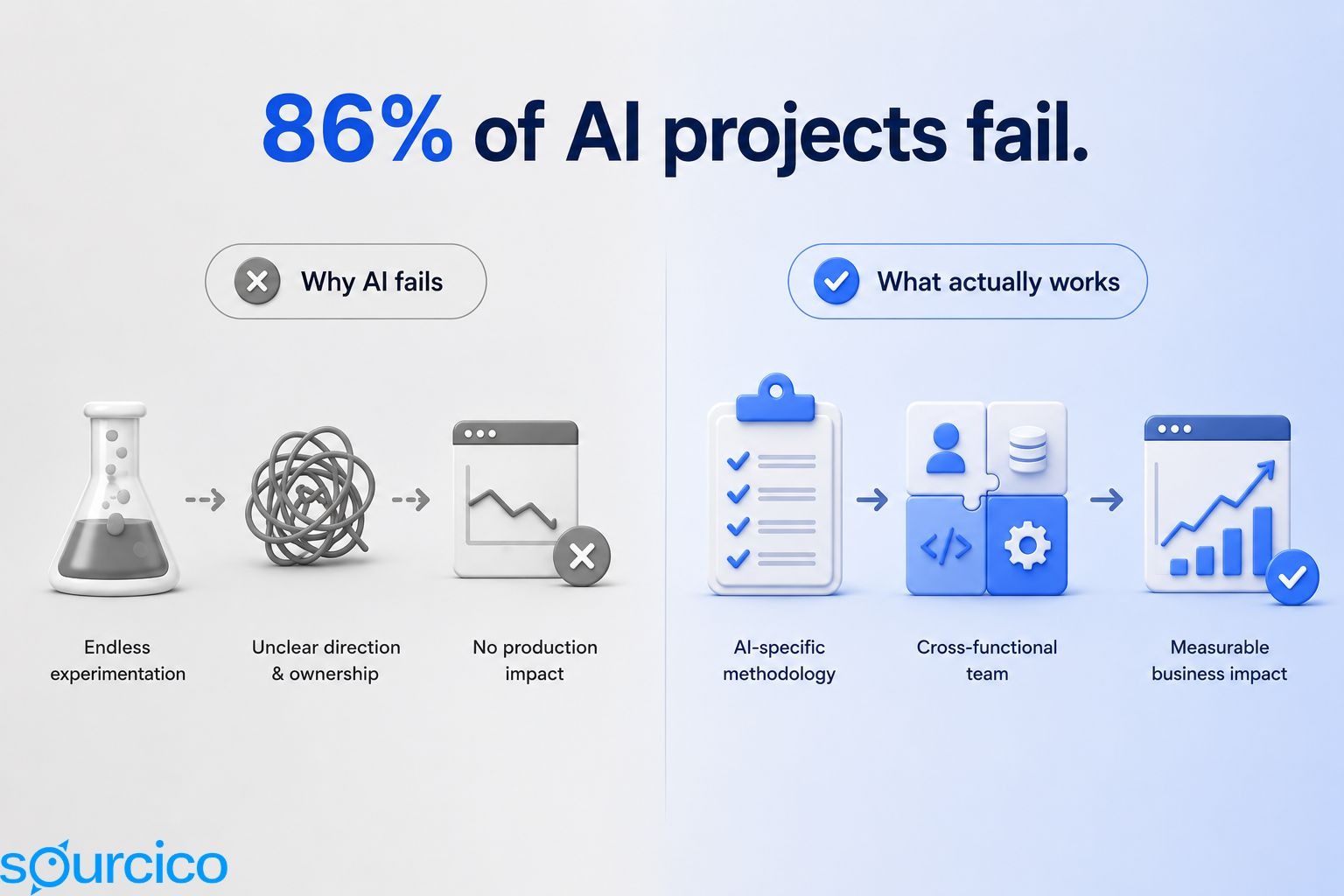
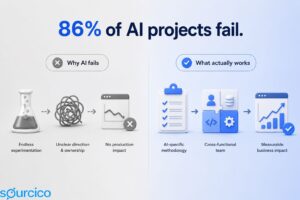
86% of AI projects fail.
Don’t let yours join the statistics.

Last year, it was 88% (IDC research, reported by CIO.com).
Companies jump into AI with excitement, but without a clear problem definition, the project collapses before it even becomes a proper POC.

Why does this keep happening? Because most teams treat AI projects like classic software development, when in reality, they behave more like scientific research with business constraints.
The result: endless experimentation, unclear ownership, and models that never reach production.

The proven way to break this cycle is to adopt AI‑specific methodologies.
Wait – methodologies? Yes! There have been enough failures in the past years to extract patterns and formalize what works.
One structured approach is the CPM‑AI methodology, promoted by PMI. It defines clear pillars that guide a POC toward becoming a real end‑user product.

And the team?
A successful setup is a cross‑functional squad: domain expert + data expert + engineering + product — replacing the old siloed “data science teams.”
When AI is built through a structured methodology instead of ad‑hoc experimentation, the failure rate drops and outcomes become measurable, not accidental.

With Sourcico, you get the right squad using the right methodology to bring your AI product to market.

AI Is Writing the Code. What’s Next?

A founder asked us recently: “We’re already using AI to write most of our code. What’s next?”

That’s the right question. And most teams aren’t asking it yet.
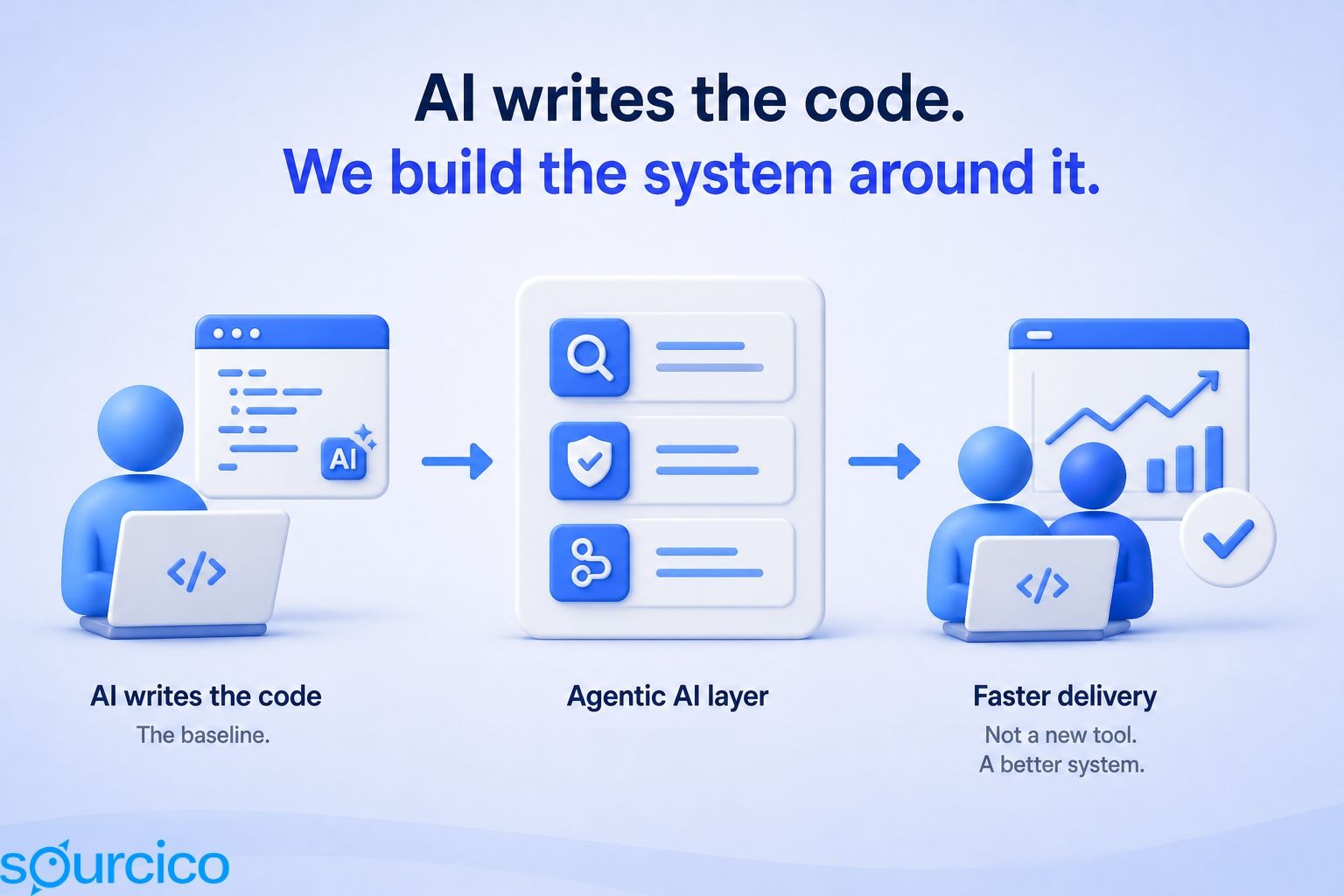
The conversation has moved. AI writing code is no longer the differentiator – it’s the baseline. Cursor, Copilot, Claude – engineers are already using these daily. The teams that are pulling ahead aren’t the ones who adopted AI. They’re the ones who figured out how to build around it.

That’s where agentic AI teams come in.
Not as a replacement for your engineering team. As a layer that runs inside it, handling the parts of the workflow that are repeatable, context-dependent, and currently eating your engineers’ time. Code review pipelines that actually understand your codebase. Agents that monitor, flag, and route issues before a human needs to look. Automated workflows that move work between systems without anyone manually bridging the gap.

The hard part isn’t building an agent. It’s integrating it into a real engineering workflow — with real constraints, real legacy systems, and a team that can’t stop to rebuild everything from scratch.

That’s exactly what we do at Sourcico. We don’t hand you a standalone AI tool and wish you luck. We architect and integrate agentic systems directly into how your team already works – so the output is faster delivery, not a new thing to manage.
AI is writing the code. The question now is who’s building the system around it.

Skip to content