

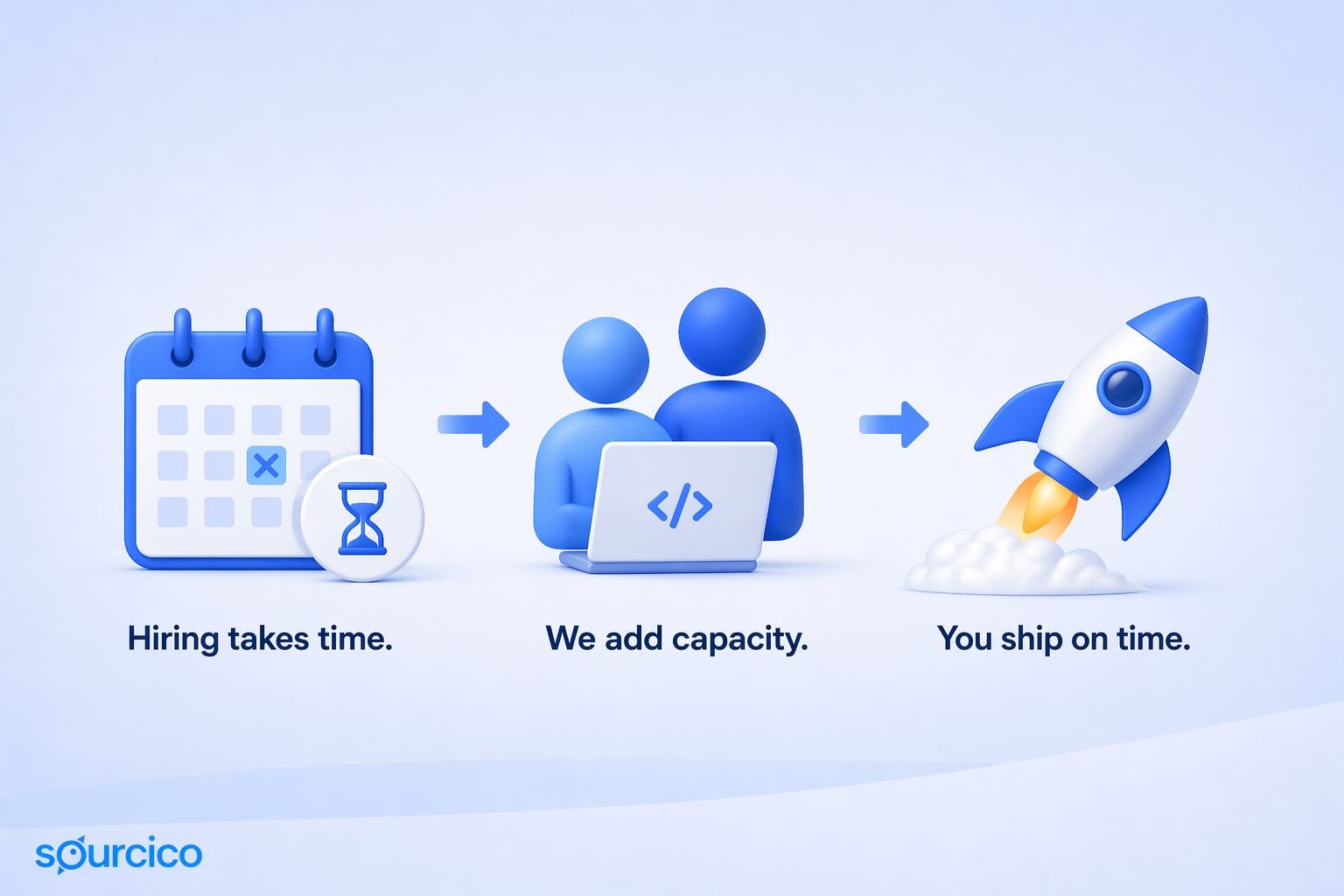
A CTO reached out to us in January.
8 weeks to a release. 3 backend roles open for 4 months. The team is already running at capacity.
His plan was to keep interviewing, get the right people in, and then push hard toward the deadline.
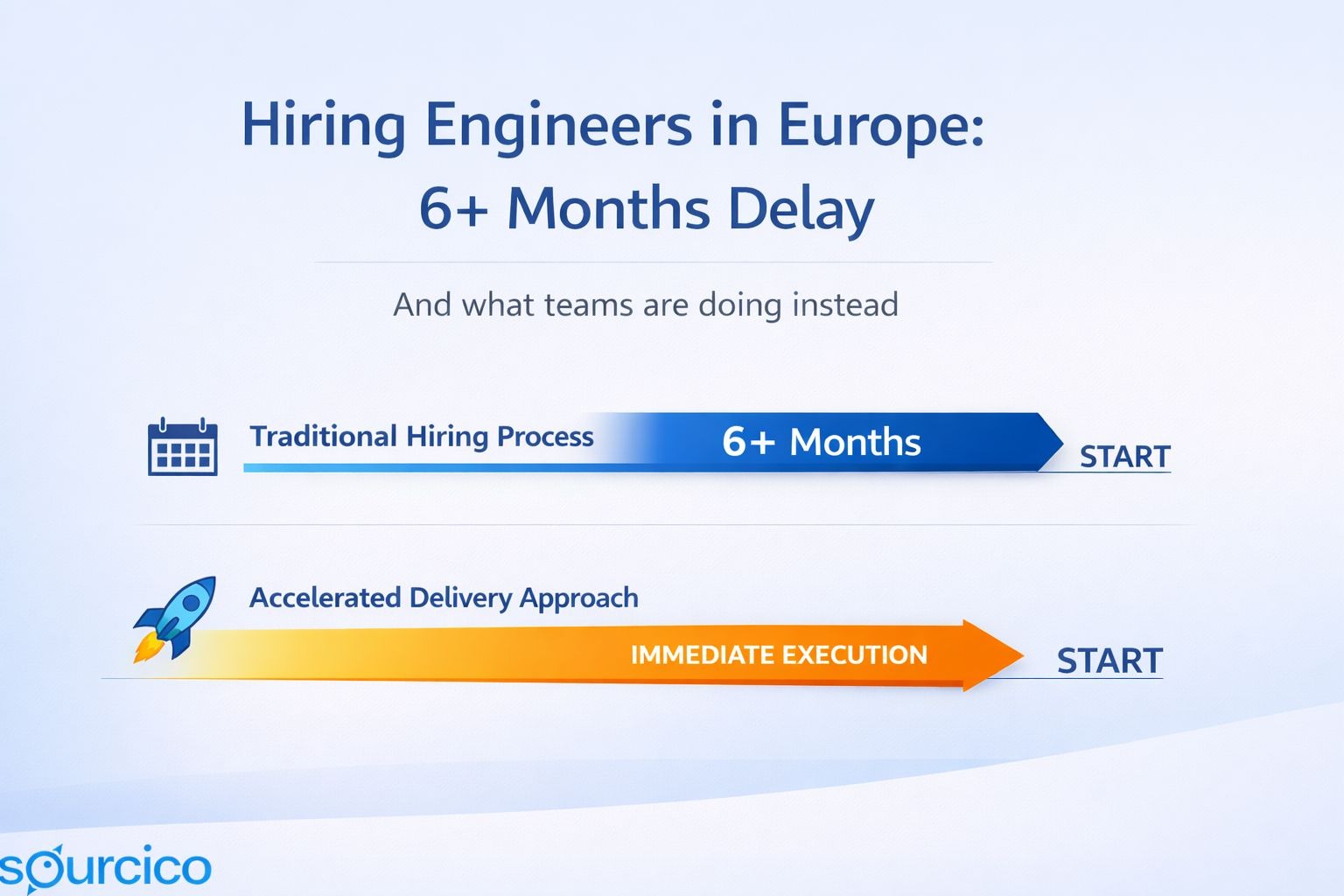
We told him that math doesn’t work. Notice periods alone eat 4 weeks. Then the ramp time. By the time a new hire is actually useful on a critical path, you’re not 8 weeks out anymore.
So we put two senior engineers into the team that week. Not as consultants parachuting in with recommendations. Inside the actual codebase, in the actual sprints, on the parts that were at risk of slipping.
The release shipped on time.
The permanent hires landed in April, into a system that was clean, well-documented, and hadn’t accumulated 3 months of pressure debt during their interviews.
Hiring is a long game. Delivery isn’t.
If you’re trying to solve a short-term capacity problem with a long-term hiring process, the timeline is already slipping; you just haven’t felt it yet.
That’s exactly the gap Sourcico exists to close. You keep your energy focused on developing your idea – we keep the engineering moving while you do it.







 This website uses cookies to ensure you get the best experience on our website